


$900.00

Description
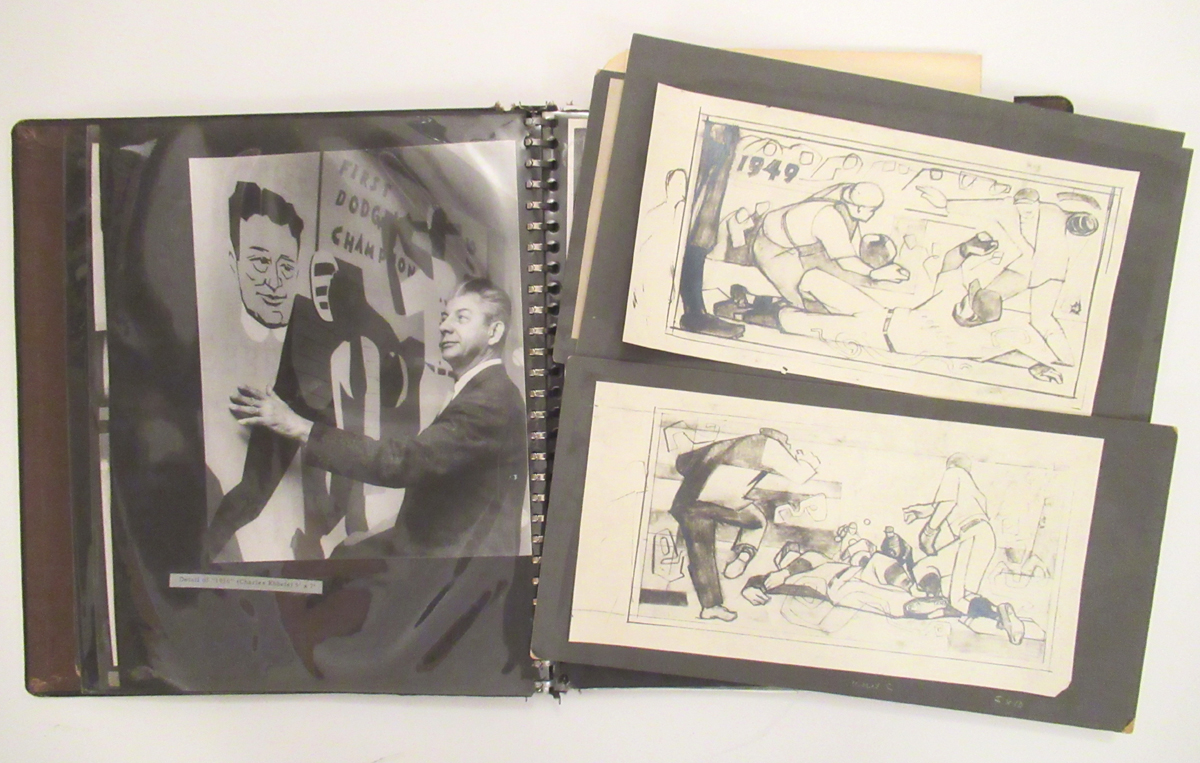
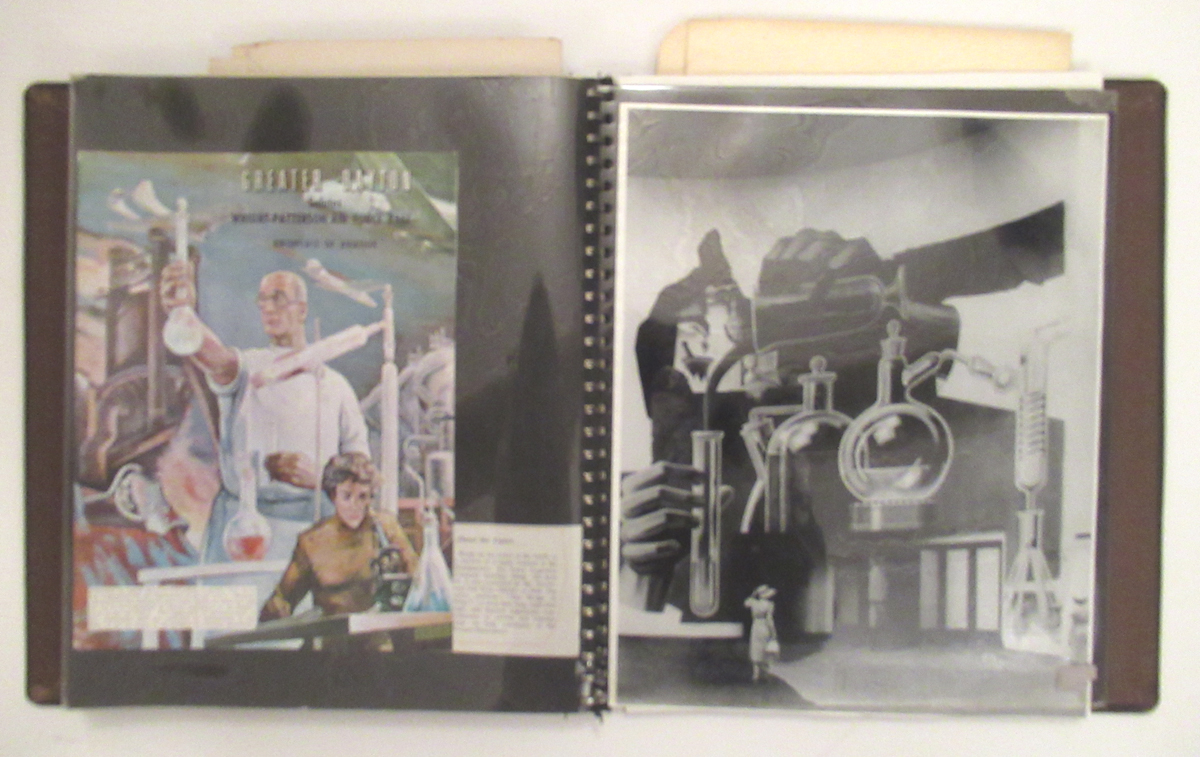
Description: This ring binder provides significant biographical information of the artist Stuyvevasant Van Veen through numerous photographs of his wide range of works, news clippings, resumes, and gallery brochures. etc., (1935-86).
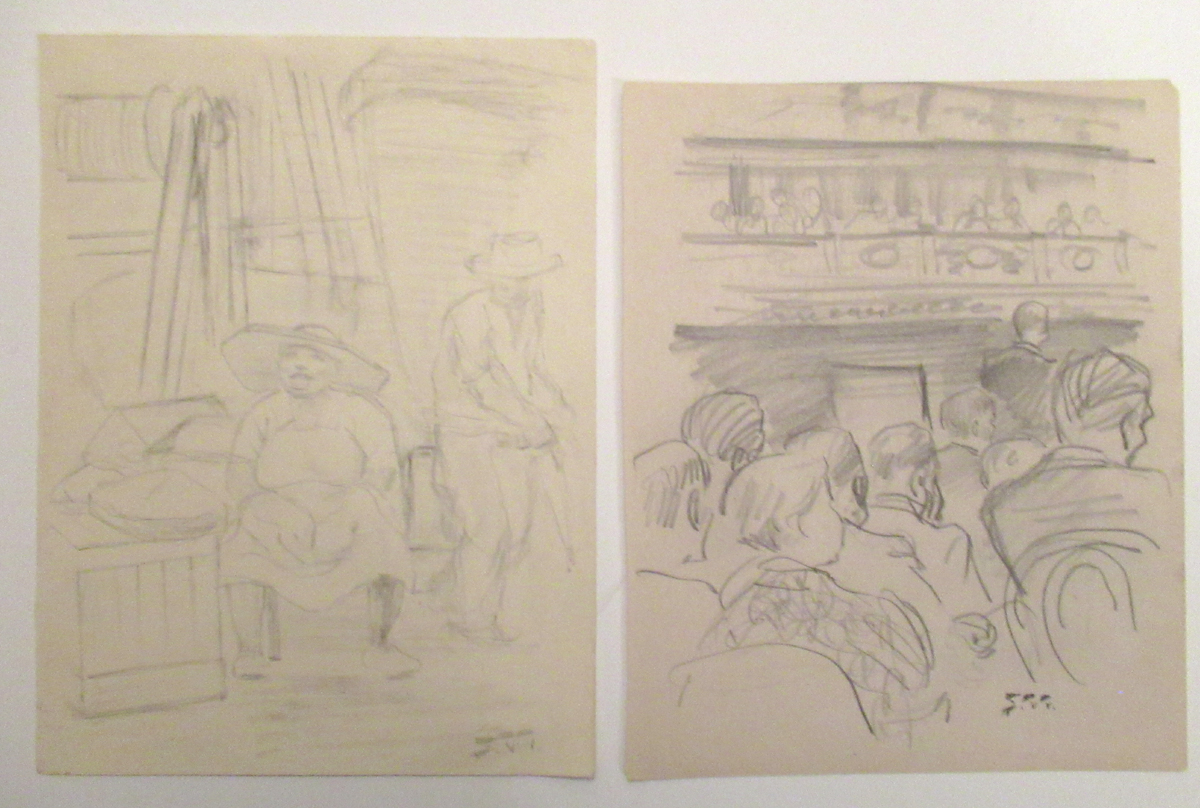
Two original pencil drawings bear the embellished initials: “S. V. V.”
One features a seated Black woman and a standing man (face abstracted) in the foreground of a dock. Directly behind them on the right is the prow of a ship and, on the left, a wooden winch. It is initialed in graphite at lower right and drawn on an 8 ¾”x 6 ¾” sheet of ivory paper.
The second sketch is a detail of a theatre. (“At Carnegie hall” is inscribed in ink on verso). The foreground has a tight profile of the backs of a seated audience looking towards a stage. The people in the box seats at the top of the page, however, are depicted with squiggly lines. Initialed “S. V. V.” in ink at the lower right and drawn on an 8 ¾”x 6 ¾” sheet of ivory paper.
A brown leather-bound ring binder (14 ½” x 12 ¼”) labelled “Van Veen Murals” has eighteen sleeves with approximately sixty items. Item #DA00467
Stuyvesant Van Veen (1910-1988) was an American artist, cartoonist, illustrator and muralist known for his leftist stance. His inclusion, at the age of nineteen, in the international exhibition of modern paintings at the Carnegie Institute in Pittsburgh in 1929, propelled his career. Van Veen’s engaging paintings offer a social commentary – incorporating cultural history and scientific expansion – on the growth of a nation and of cities. Some of his representative works are: Peace Conference (1932) The Spirit of Steel (1938-39); The Bridge of Wings at the Wright-Patterson Air Force Base (1944); Seven Triumphs of the Brooklyn Dodgers at the Ebbets Field Apartments (1963). The Bridge recently provoked controversy for its supposedly “offensive” imagery.
Condition: The photographs are in good condition. The Carnegie sketch has a 1” tear at the upper edge reinforced on the verso with archival tissue tape.


