

Description
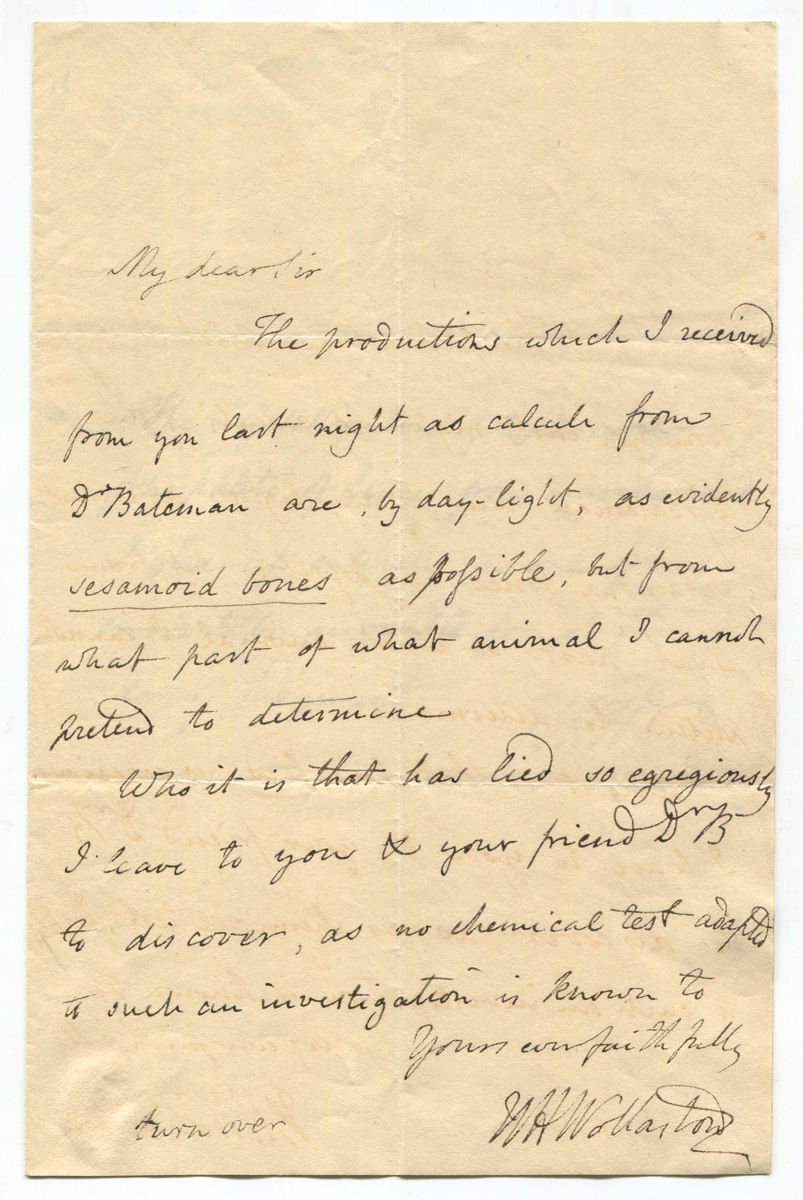
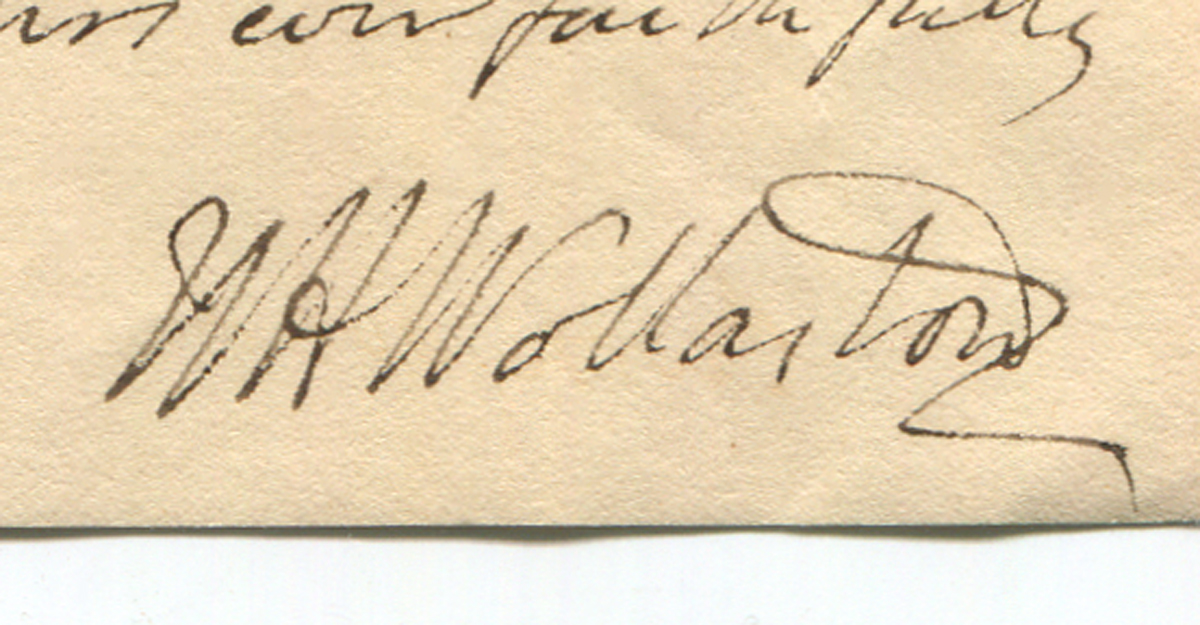
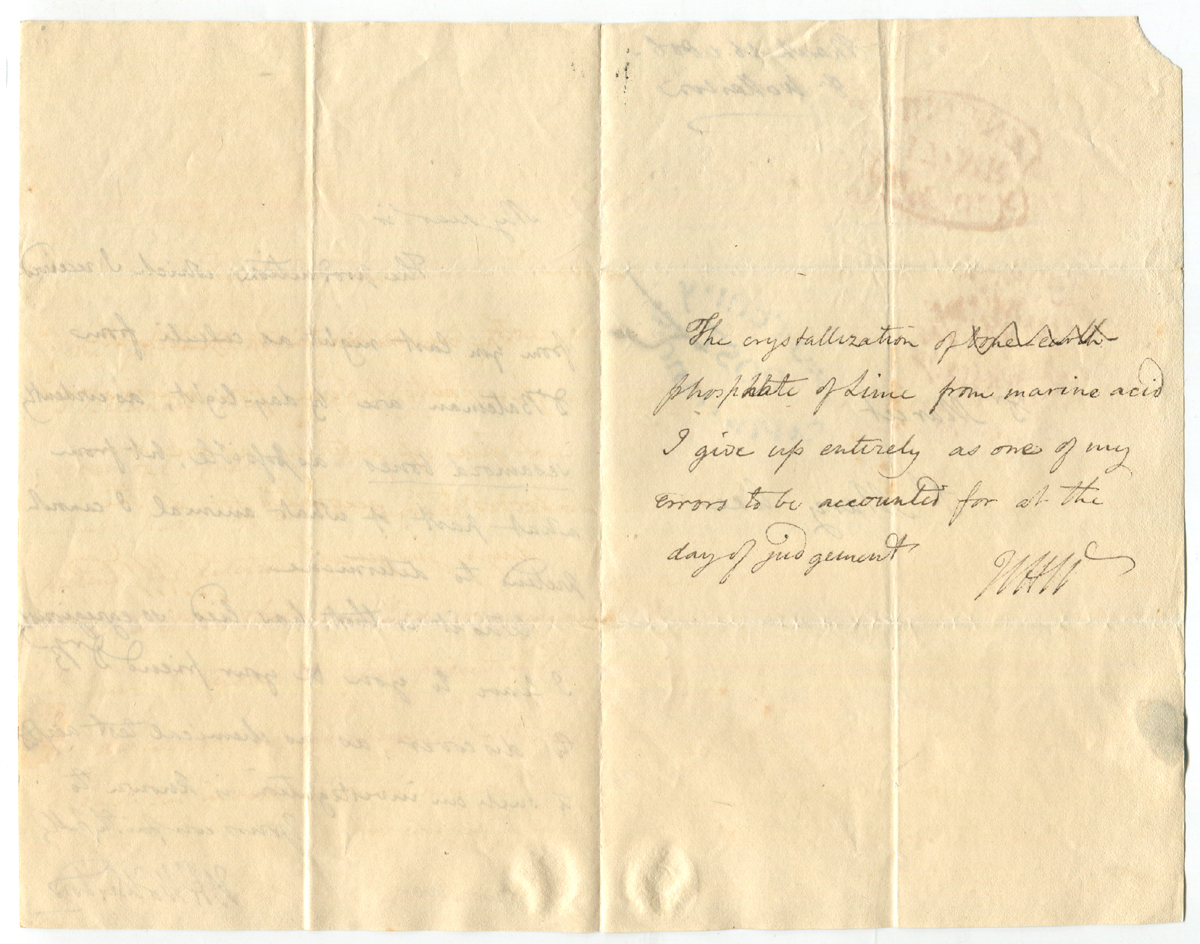
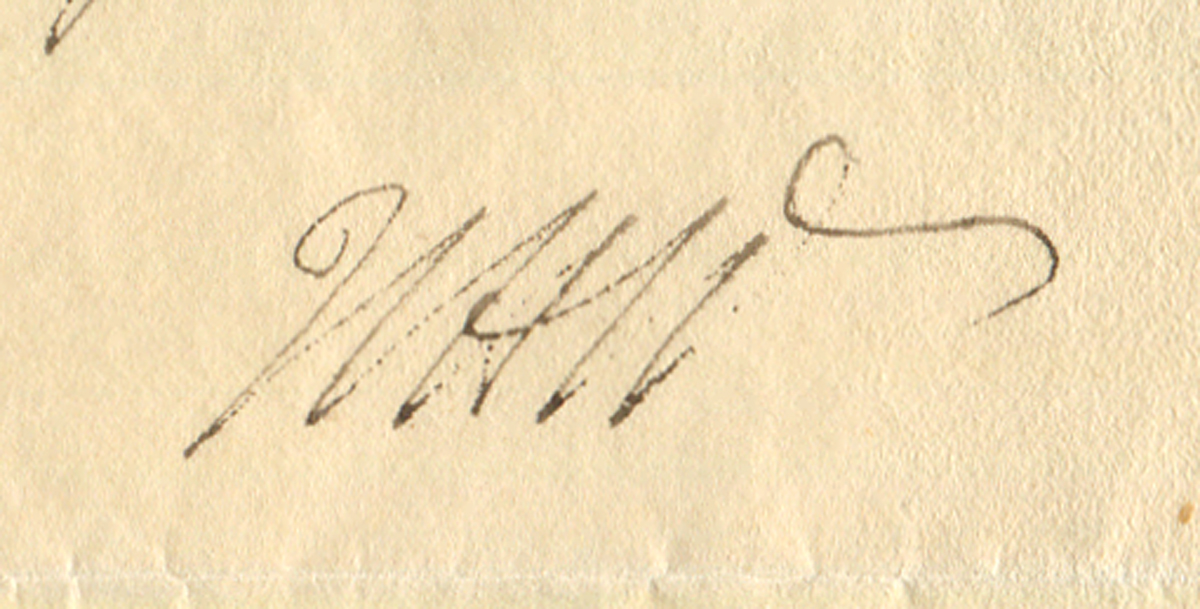
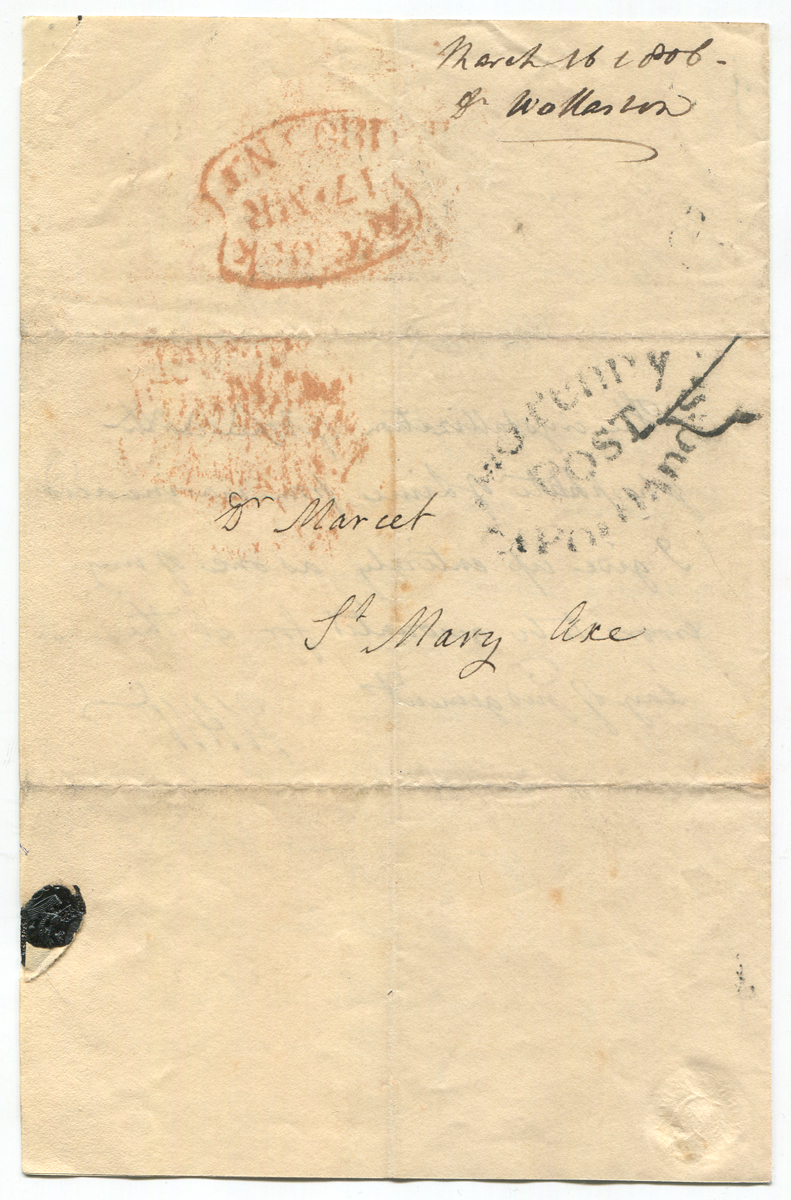
Description: In this autograph letter signed, Wollaston writes to the chemist Dr. John Marcet saying in part: “the productions which I received… as calculi from Dr. Bateman are, by daylight, as evidently sesamoid bones as possible, but from what part of what animal I cannot pretend to determine” And as a postscript: “the crystallization of phosphate of lime from marine acid I give up entirely…one of my errors to be accounted for at the day of judgement…”
Written on two pages of a folded 7″ x 9″ sheet of paper and dated March 16, 1806. It is used as a stampless cover, addressed in Wollaston’s hand to “Dr. Marcet/St. Mary Ave”, and retaining two postal cancellations. Item #A02005
William Hyde Wollaston (1766-1828), English scientist, was trained as a medical doctor who abandoned medicine to become a chemist and physicist. His skill was best demonstrated in his important investigations on platinum metals–discoveries of palladium and rhodium; he also developed a way to process platinum into malleable ingots. He built the first spectrometer in 1802 and coined the term bicarbonate. He also improved on John Dalton’s atomic theory. Mineralogists called upon him to determine the chemical composition of new minerals. Wollastonite was named in his honor for his contributions to crystallography. Fearful of competing interests, he was secretive about his work and, therefore, lesser known than Dalton or Humphry Davy. Wollaston was the godfather of William Blake’s son, Henry Wollaston Blake.
Dr. John Marcet (1770-1822) was popularly known as the fever doctor and was an accomplished British-Genevan chemist. He was physician at Guy’s Hospital between 1804-1819. He supported Edward Jenner in encouraging universal inoculation against smallpox. His medical publications include how to procure vaccines (with Jenner), studied the beneficial qualities of mineral water, accounts of hydrophobia, nephritis, alkali in blood, and “calculous disorders,” etc. His chemical papers were concerned with the use of nitrate as a test for arsenic, beneficial qualities of mineral water, etc.
Condition: A small chip to blank corner of pages 3/4, mailing fold lines, otherwise very good.


